

Most businesses don’t plan to build a multi-agent AI system — it just happens. One automation here, another there, until the agent count quietly outpaces anyone’s ability to track it.
Smart AI Agent Development fixes that. It treats your agents as one coordinated system, built around a single workflow and a single line of oversight.
This guide explains what a multi-agent AI system is, how it works, when your business genuinely needs one, and how to turn scattered automation into a strategy that scales.
What Is a Multi-Agent AI System?
A multi-agent AI system is a group of AI agents that each own one task and hand work to each other to deliver one outcome. Think of it as a small specialist team rather than one overworked generalist.
A single agent or chatbot tries to do every step itself. It reads the request, looks up the data, makes the decision, and checks its own work. That works for narrow jobs. It breaks down when a workflow spans several systems and several kinds of judgment.
Take a typical IT service request:
- An intake agent logs the request and captures the details.
- A routing agent decides who or what should handle it.
- An execution agent completes the task: resetting access, provisioning a tool, or updating a record.
- A QA agent checks the result before the ticket closes.
Each agent does one thing well. Together, they close the loop without anyone retyping a word.
How Multi-Agent Systems Work: The Engine Behind AI Agent Development
Modern Generative AI Solutions make each agent capable. Good architecture makes them useful together. Three mechanics do the heavy lifting.
Orchestration
An orchestrator sits at the center. It reads each incoming request, breaks it into tasks, assigns each task to the right agent, and sequences the work. It also decides what happens when an agent fails or returns a weak result.
Specialisation
Each agent does one job. A pricing agent knows your rate cards. A compliance agent knows your policies. Narrow scope makes agents faster to build, easier to test, and simpler to fix when something changes.
Handoffs
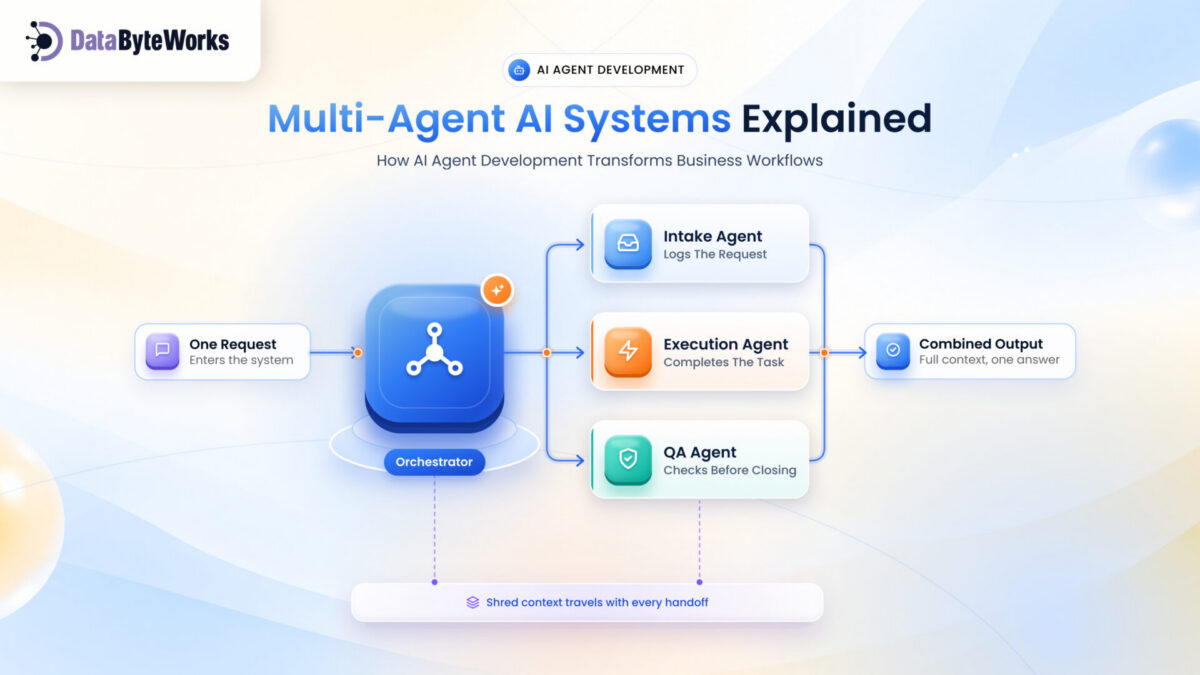
Agents pass context, not just outputs. The routing agent sees what the intake agent captured. The QA agent sees what the execution agent changed. Your users explain their problem once. That shared context separates real artificial intelligence solutions from a pile of disconnected bots.
One request goes in, the orchestrator splits the work across specialist agents, and one combined answer comes out.
Why This Is Happening Faster Than Most Businesses Realize
Agent adoption has moved from pilots to production, and fast.
In the UAE, 62% of CIOs report more than 50 AI agents in production, and 15% run more than 500. That is the highest share of any market in Dataiku’s Global AI Confessions Report: CIO Edition 2026, which Harris Poll conducted across 685 CIOs in eight countries.
The wider software market points the same way. Gartner predicted that 40% of enterprise applications would integrate task-specific AI agents by the end of 2026, up from less than 5% in 2025. Every one of those embedded agents joins your agent estate, whether you planned it or not.
Here’s the pattern we see most often. Nobody sets out to build a multi-agent system. Teams adopt agents one at a time: one in the help desk, one in finance, one inside the CRM. Within a year, the business already runs a multi-agent system. It just runs one without an orchestrator.
The Real Challenge Isn’t Building Agents. It’s Overseeing Them
Building one agent is now a well-understood engineering task. Overseeing fifty is not.
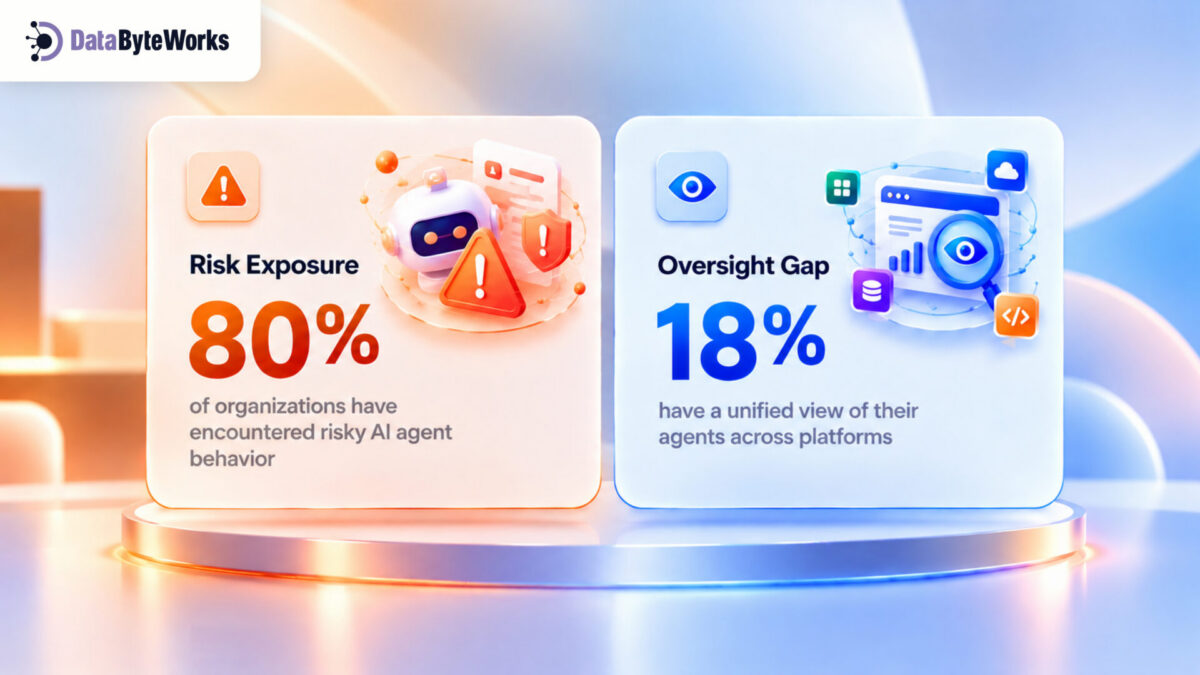
The same Dataiku research exposes the gap. Only 18% of UAE CIOs have a fully unified view of their agents across platforms, and just 12% have standardized agent lifecycle management. Only 5% can reliably find and contain a problematic agent within one to two hours, and more than two-thirds can’t contain one on the day they find it.
Problem agents aren’t hypothetical. McKinsey reports that 80% of organizations have already encountered risky behavior from AI agents, including improper data exposure and unauthorized system access.
That’s why oversight belongs in your enterprise AI strategy, not on an engineering backlog. Every new agent adds an identity to manage, permissions to audit, and a failure point to watch. Decide these three things early:
- Visibility: one live inventory of every agent, on every platform.
- Control: a tested way to pause or roll back any agent in minutes.
- Accountability: a named owner for each agent and each workflow.
When Your Business Actually Needs a Multi-Agent System
Not every problem needs a team of agents. Use this quick test.
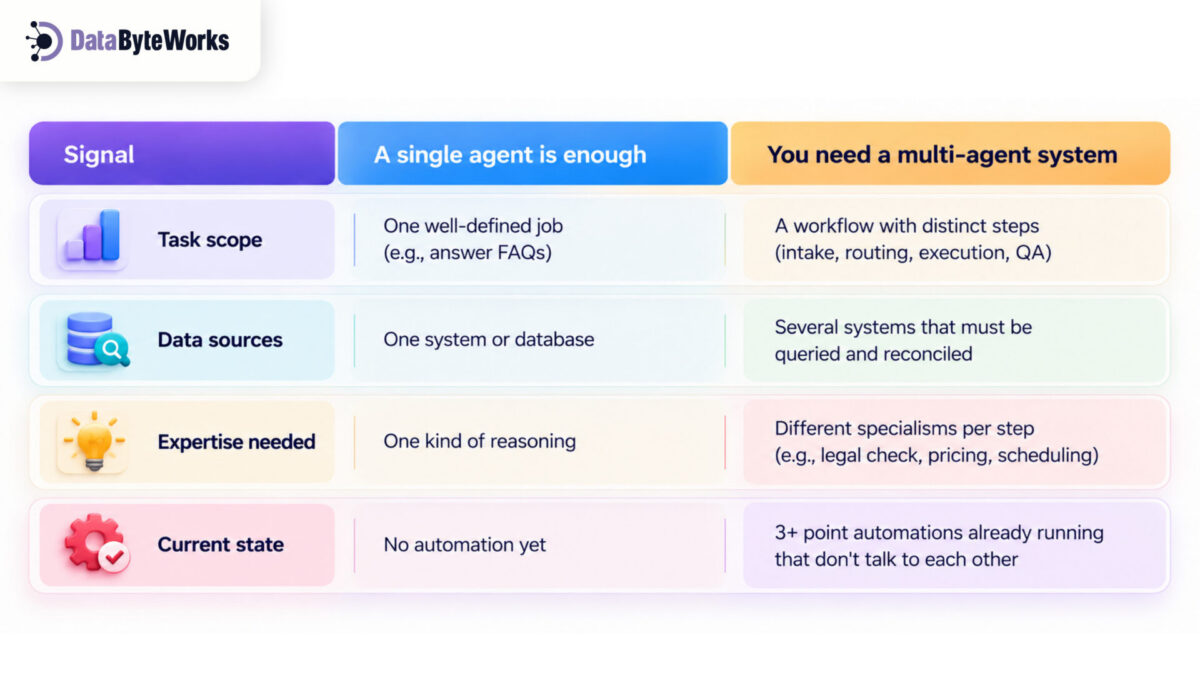
If two or more rows land in the right-hand column, you’re already in multi-agent territory. The real question is whether you design that system or let it assemble itself.
Where to Start: Turn Scattered Automation Into an AI Agent Development Strategy
Start with a roadmap, not a build. Your first step is an honest audit: what’s already automated, which agents exist, and where the handoffs break.
That’s where AI strategy consulting and AI roadmap consulting earn their keep. They map your current agents, rank workflows by value and risk, and sequence what to connect first. You get a plan your IT, operations, and security teams can all sign off on.
DataByteWorks is an AI development company that designs oversight from day one, rather than bolting it on after agents go live. Our AI consulting services and AI transformation consulting shape the plan. Our AI development services and custom software development services build the orchestrator, the agents, and the integrations with your existing systems.
Ready to make your agents work as one system?
Book a free AI Agent Development roadmap review with DataByteWorks today.