

A developer needs a new test environment, so she files a ticket and waits two days. Meanwhile, the DevOps team is buried under fifty similar requests. Everyone works hard, yet releases still slow down.
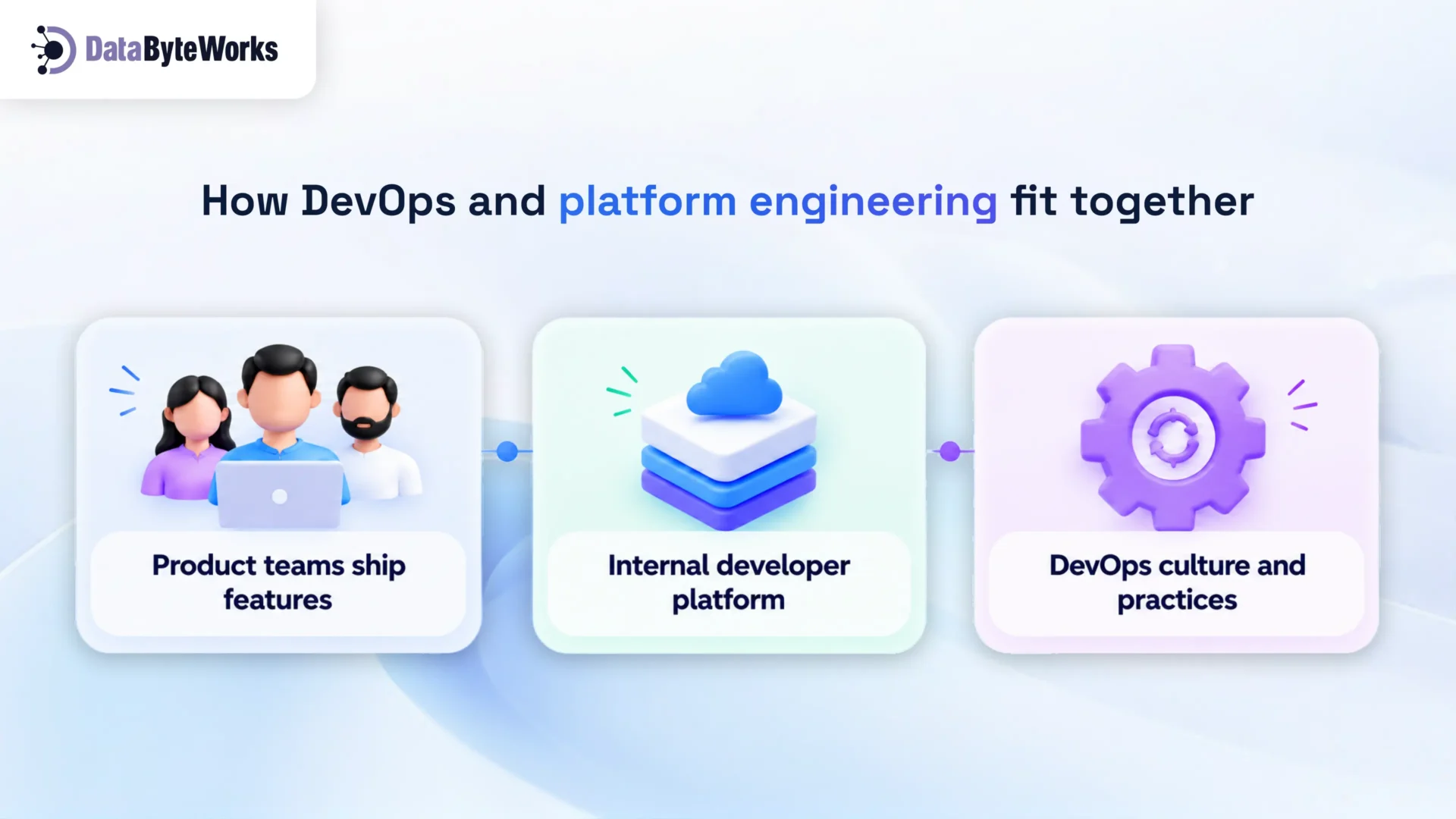
This is where the platform engineering vs DevOps question begins. DevOps gave teams the right culture: build it, ship it, and own it together. Platform engineering helps that culture work at scale. Gartner predicts that 80% of large software engineering organizations will have platform engineering teams by 2026, up from 45% in 2022.
In this guide, you’ll learn what each approach means, how they differ, and how to tell which one your team needs right now.
What Is DevOps?
DevOps is a culture and a set of practices that bring development and operations teams together. Its goal is simple: ship software faster and more safely.
In practice, DevOps teams automate the work between writing code and running it. They use CI/CD pipelines to test and release code automatically, infrastructure as code to set up servers with scripts, and monitoring to spot problems early. The core idea is “you build it, you run it.” The team that writes a service also looks after it in production.
What Is Platform Engineering?
Platform engineering is the practice of building and running an internal developer platform. This platform is a set of self-service tools that lets developers create environments, deploy code, and check security on their own, without filing tickets.
A dedicated platform team owns this work, and it treats the platform like a real product. Its customers are your own developers. The team asks what slows them down, builds tools to fix it, and keeps improving based on feedback.
The result is a better developer experience: less waiting, fewer handoffs, and less time spent wrestling with infrastructure.
Platform Engineering vs DevOps: A Side-by-Side Comparison
The two approaches share the same goal, but they get there in different ways:
| DevOps | Platform engineering | |
| Main focus | Culture and shared ownership | A product that makes DevOps easy |
| Main output | Practices, pipelines, and automation | An internal developer platform |
| Who it serves | The whole delivery process | Developers, as internal customers |
| Team model | Skills spread across product teams | A dedicated platform team |
| How it scales | By adding people and knowledge | Through self-service tools |
| Key metrics | Release speed and stability | Platform adoption and developer satisfaction |
| Common challenge | Tool sprawl and ticket overload | Building tools nobody uses |
In short, DevOps defines how teams should work. Platform engineering makes that way of working easy for everyone.
Who Does What: Roles in Plain Language
When a company adds a platform team, each role gets a clearer focus:
| Role | What they own day to day |
| Product developer | Builds features and ships them using the platform’s ready-made tools |
| DevOps engineer | Improves pipelines, automation, and release practices across teams |
| Platform engineer | Builds and runs the internal developer platform, and treats developers as its users |
In smaller companies, one person often covers both the DevOps and platform roles. That’s fine, as long as everyone knows who owns the platform.
Why Platform Engineering Is Growing in 2026
Platform engineering in 2026 is no longer a trend for tech giants alone. Three problems are pushing companies of every size toward it:
- Too many tools. Teams juggle dozens of cloud services, security scanners, and pipelines.
- Heavy cognitive load. Developers must remember how every tool works, which leaves less energy for building features.
- Ticket overload. DevOps teams spend their days answering requests instead of improving systems.
Adoption is already wide. Google’s 2025 DORA report, based on nearly 5,000 technology professionals, found that 90% of organizations have adopted at least one internal platform.
Among the biggest DevOps trends 2026 has brought, AI-assisted coding and stricter security rules stand out. Each one makes a single, well-run platform more valuable.
What Goes Inside an Internal Developer Platform
A good internal developer platform brings five building blocks together:
- A developer portal: one place to find services, docs, and owners.
- Golden paths: ready-made, approved templates for building and shipping a new service.
- Self-service environments: test and staging setups that developers can create in minutes.
- Built-in security checks: scans that run automatically, so security doesn’t depend on memory.
- Monitoring: shared dashboards that show how each service is running.
Starting small? If you have 20 to 50 developers, you don’t need all five on day one. Begin with one golden path for your most common service and one self-service test environment. Then add more as teams ask for them.
Do You Need a Platform Team Yet? Take the 2-Minute Check
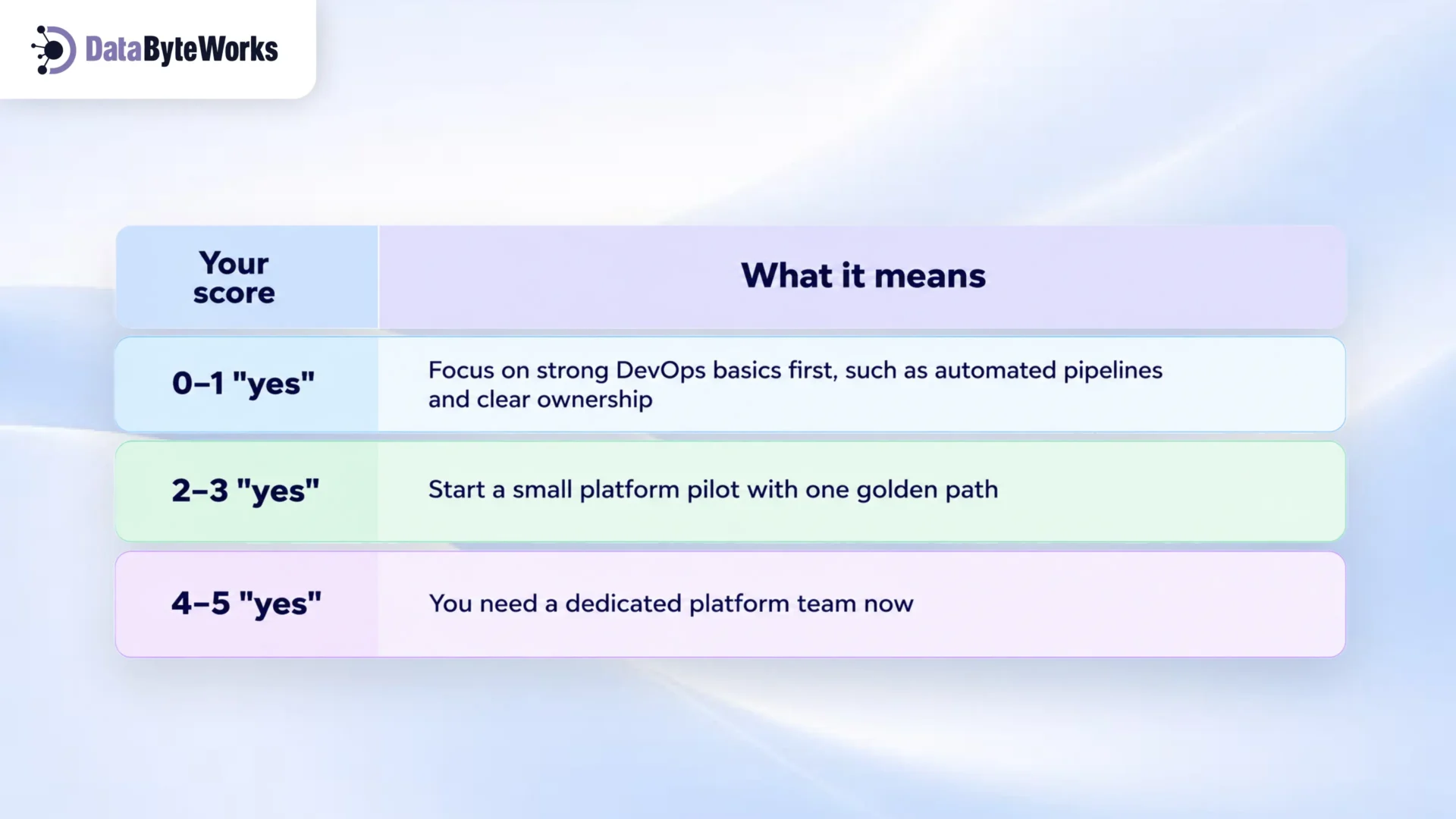
Not every company needs a platform team today. Answer these five questions, and count your “yes” answers:
- Do you have more than five product teams?
- Do developers wait days for environments or access?
- Does each team build its pipeline in a different way?
- Does your DevOps team spend most of its time on tickets?
- Do people still run security or compliance checks by hand?
Why Platforms Fail, and How to Avoid It
A platform only helps if developers actually use it. Watch out for these three mistakes:
- Building what no one asked for. Survey your developers first, and fix their biggest pain point.
- Forcing everyone onto it. Make the platform the easiest option, so teams choose it on their own.
- Never checking satisfaction. Ask developers every quarter what works and what doesn’t.
How to Measure Success
DevOps and platform engineering need different scorecards. Track both to see the full picture:
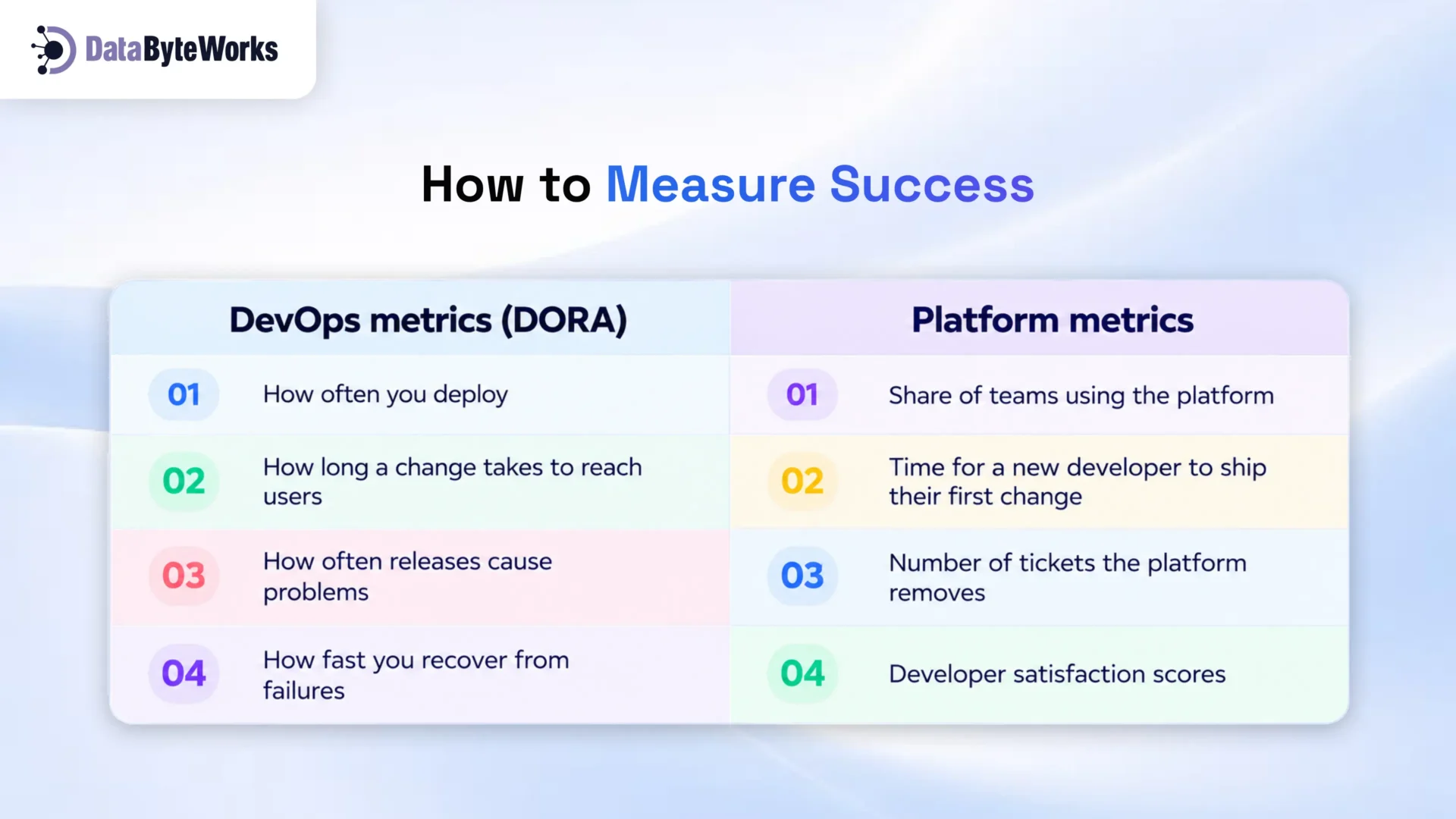
The platform metrics matter most for developer experience. If developers ship faster and feel less frustrated, your platform is doing its job.
The AI Angle: Why Your Platform Matters More Now
AI coding tools are now part of daily work. The 2025 DORA report found that 90% of respondents use AI at work. It also found a direct link between a high-quality internal platform and an organization’s ability to get real value from AI (Google Cloud).
The reason is simple. AI helps developers write code faster, but that code still needs testing, security checks, and safe releases. A strong platform turns AI’s speed into reliable releases instead of more bugs.
Ready to Speed Up Delivery?
Whether your team needs stronger DevOps habits or its first internal developer platform, you don’t have to figure it out alone. DataByteWorks helps growing teams automate their pipelines, design golden paths, and build lean platforms that developers actually enjoy using.
We’ll review your current setup, score your readiness, and show you the fastest next step.
Book your free DevOps and platform readiness assessment today.