

A solid cybersecurity checklist for businesses is no longer optional. It’s the difference between catching a gap early and paying for it later. Data breaches now cost businesses with under 500 employees an average of $3.31 million (IBM Cost of a Data Breach Report 2026). Most of that damage comes from basics that got overlooked.
This Cybersecurity Awareness Month is a good time to close that gap. Below is a simple checklist covering endpoints, passwords, patching, backups, employee training, cloud application security, and incident response. It’s built for growing businesses that don’t have a large security team, but still can’t afford to get this wrong.
Why Cybersecurity Awareness Month Matters for Growing Businesses
Awareness Month works best as a deadline, not just a theme. Here’s why the numbers back that up.
The Real Cost of a Data Breach for Growing Businesses
A data breach costs more than the ransom or the fine. You also lose time, customer trust, and engineering hours that should go toward shipping products. For businesses with fewer than 500 employees, the average bill is now $3.31 million per breach, which is enough to sink a growing company, not just hurt a quarter.
Small Businesses Are Now a Primary Target, Not an Afterthought
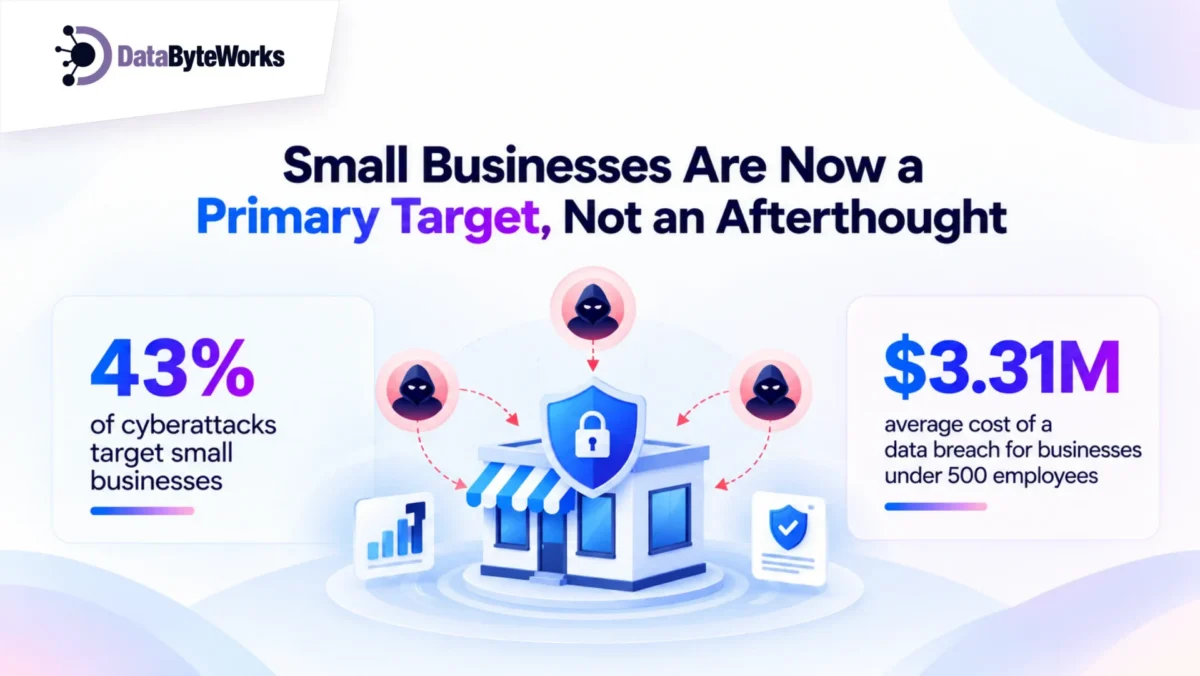
Attackers don’t skip small businesses for bigger targets. They go after small businesses because they’re easier to break into. 43% of all cyberattacks now target small businesses, not because the data is worth more, but because the defenses are weaker and faster to get through.
The Security Checklist for Growing Businesses
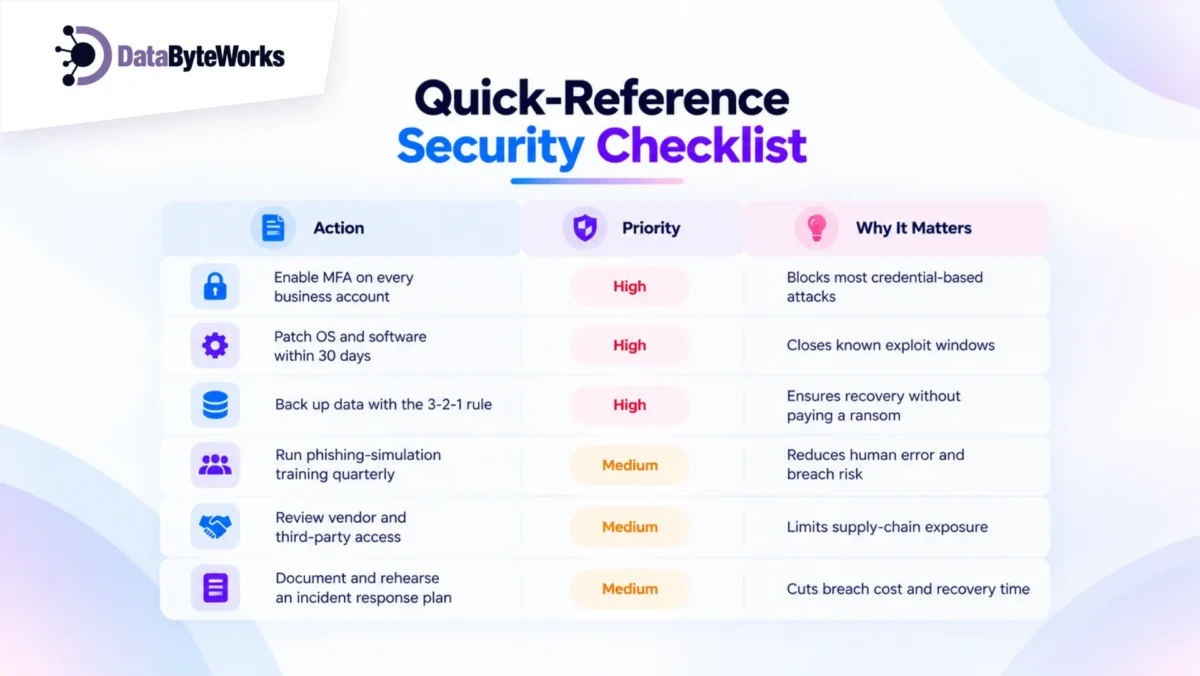
Here’s the core checklist: seven areas you can act on this month. Assign one owner to each.
Secure Every Endpoint and Device
Every laptop, phone, and server is a possible way in. Install endpoint protection on each device, turn on disk encryption, and make sure lost or stolen devices can be wiped remotely. One unmanaged laptop can undo everything else on this list.
Enforce Strong Passwords and Multi-Factor Authentication
Weak or reused passwords are still the easiest way in. Require a password manager, don’t allow reused credentials, and turn on multi-factor authentication for every admin, email, and cloud account, not just the ones that seem important.
Patch Software and Systems on a Fixed Schedule
Don’t wait for IT to notice an update is overdue. Set a fixed patch window, for example, 30 days from release, no exceptions, for operating systems, browsers, and business apps. Most attacks exploit vulnerabilities that a patch already fixed months earlier.
Back Up Data and Test Recovery Regularly
A backup you’ve never tested is just a guess, not a safety net. Follow the 3-2-1 rule: three copies, two formats, one stored off-site, and run a test restore every quarter so you know it works before you need it.
Train Employees to Spot Phishing and Social Engineering
Your firewall can’t stop someone from clicking a convincing link. 95% of SMB security incidents involve human error. That’s why quarterly phishing-simulation training is one of the highest-return items on this list.
Secure Cloud and Application Environments
Most growing businesses run on cloud infrastructure and custom-built applications. Both need their own security, not just a firewall at the network edge. That means access controls on every cloud resource, encrypted data in transit and at rest, and application security best practices built into how your software is written. If your team ships custom features often, application security services close gaps a generic IT review misses because they treat secure software development as a design requirement, not something fixed after launch.
Monitor Networks and Prepare an Incident Response Plan
You can’t respond to what you can’t see. Set up network monitoring, and write down and rehearse an incident response plan before you need one. A plan made during an active breach is already too late.
Cybersecurity Mistakes That Cost Growing Businesses the Most
Most breaches don’t start with a sophisticated attack. They start with one of these three habits.
Treating Security as a One-Time Setup
A security review from launch day doesn’t protect what you’ve shipped since. Threats change, your codebase grows, and every new integration adds risk. Security has to be an ongoing habit, not a one-time project.
Ignoring Vendor and Third-Party Risk
Every vendor with access to your systems or data adds to your risk. If you lock down your own systems but never check vendor access, you’ve only solved half the problem.
Assuming “We’re Too Small to Be a Target”
This assumption is exactly why small businesses get hit so often; it’s why their defenses stay thin. Being small doesn’t make you invisible to attackers. It just means fewer people are watching for them.
How DataByteWorks Helps Growing Businesses Build Cyber Resilience
We help growing businesses close these gaps without building an internal security team from scratch. It starts with enterprise system integration that connects your tools without adding new, unmonitored access points. It extends into managed IT and support services that keep patching, monitoring, and backups running in the background. So, cyber hygiene for businesses doesn’t depend on someone remembering to do it.
Every engagement uses the same application security best practices we apply in our own development work, from threat modeling to automated vulnerability scanning.