Case Studies
Industry
Logistics & supply chain: revenue protection and logistics analytics
Engagement
Dedicated team · 3 years
Compliance
GDPR, SOC 2 Type 1
CLIENT
ARG, a revenue protection and logistics analytics SaaS provider
[Staff Size - 50–200]
Air cargo carriers, freight forwarders, VOCCs, contract logistics, rail and surface (LTL/FTL) carriers
Logistics & supply chain
US (New Jersey); ARG's customers operate in 75+ countries
Legacy modernization services: .NET Framework to .NET 10 migrationmigration, Azure cloud migration, logistics data analytics, Power BI Embedded dashboards
Dedicated team · 3 years · 4 developers + 1 tech lead/PM
9 months, with the legacy system supported in parallel
.NET 10, C#, Dapper, Azure SQL Database, Azure, AI-enabled SSIS ETL, Power BI Embedded
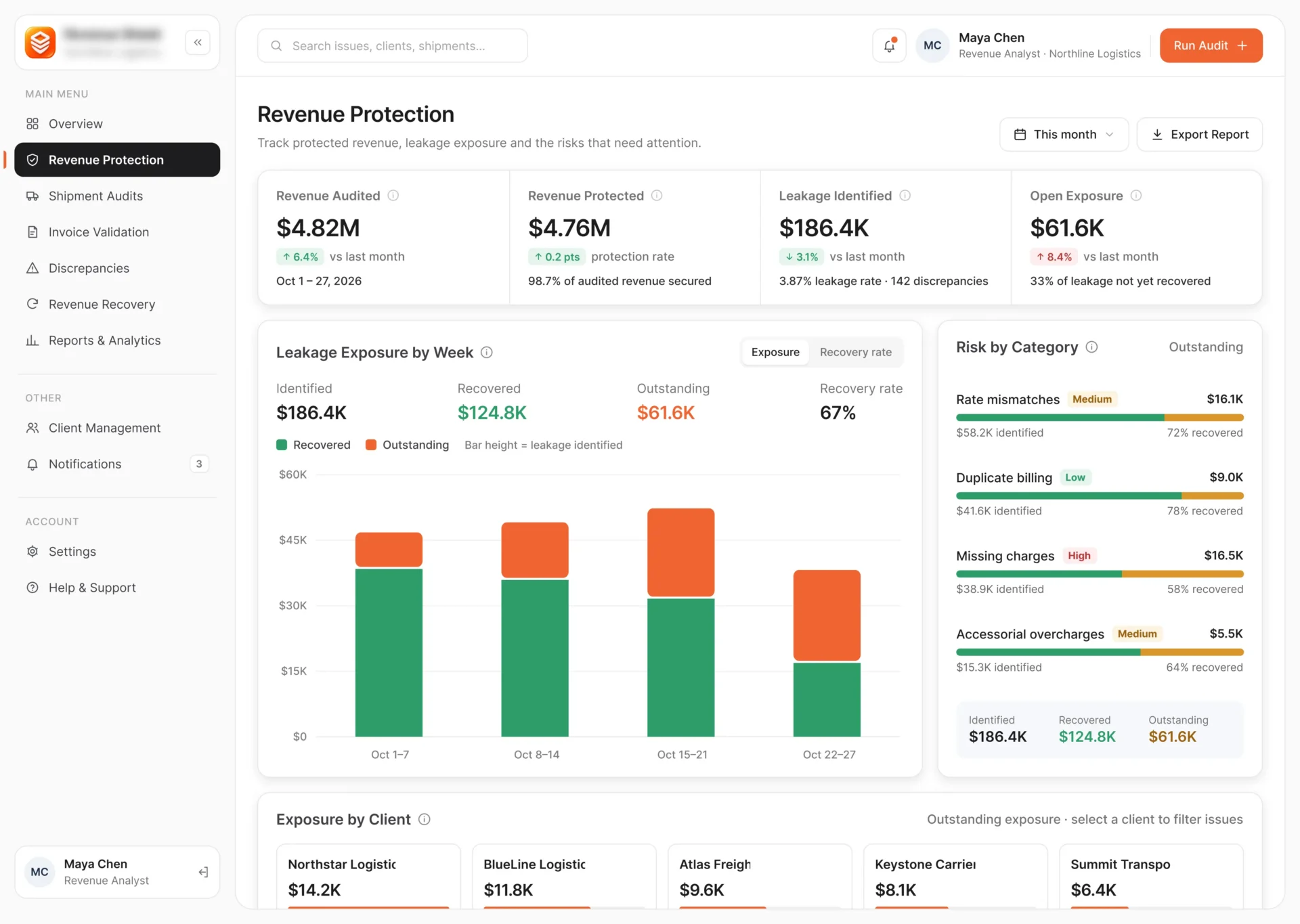
ARG’s logistics analytics platform helps carriers and forwarders find revenue they are owed but never billed, from missed charges to duplicate charges. Missed charges were the biggest source of lost revenue for its customers, and finding them was slow and manual.
High volume: 100K+ shipments and invoices a month had to be checked.
Manual audits: 5–8 auditors spent about 40 hours a week comparing charges against contracts.
Aging platform: the system ran on .NET Framework 4.8, SQL Server 2014 (out of Microsoft support since July 2024), and ETL jobs on on-premises servers.
Growing compliance demands: carrier customers needed GDPR and SOC 2 assurance, and their data had to be kept physically separate.
No room for downtime: ARG needed to replace the old system without pausing audits for live customers.
ARG chose to hire .NET developers from DataByteWorks as a dedicated team. Four developers and a tech lead/PM have worked with ARG for three years. As part of our legacy modernization services, the full upgrade of the application, database, and infrastructure took nine months, and we kept the legacy system running for live customers throughout.
Key decision: single-tenant, not multi-tenant. Each ARG customer gets its own physically isolated database. Multi-tenant would have been cheaper to run, but carriers' compliance rules require physical data separation. We automated provisioning so each new tenant is set up the same way.
Moved to Azure. Moved on-premises servers and ETL to Azure, and migrated SQL Server 2014 to a fully managed Azure SQL Database.
Upgraded the application from .NET Framework 4.8 to .NET 10, the current long-term support release, supported until November 2028.
.NET Framework 4.8
.NET 10
Desktop to web.We moved the single-user desktop modules into the web application, so many users can now work at the same time.
Replaced ADO.NET and POCO data access with Dapper, keeping hand-tuned SQL for heavy audit queries with far less boilerplate code.
Used AI where the data is messiest. We made the SSIS ETL jobs AI-enabled, so carrier files in different layouts are parsed, mapped, and loaded without manual clean-up. Data arrives as CSV files over SFTP and through real-time APIs.
Built in compliance. App, database, and infrastructure were brought in line with GDPR and SOC 2 Type 1 requirements.
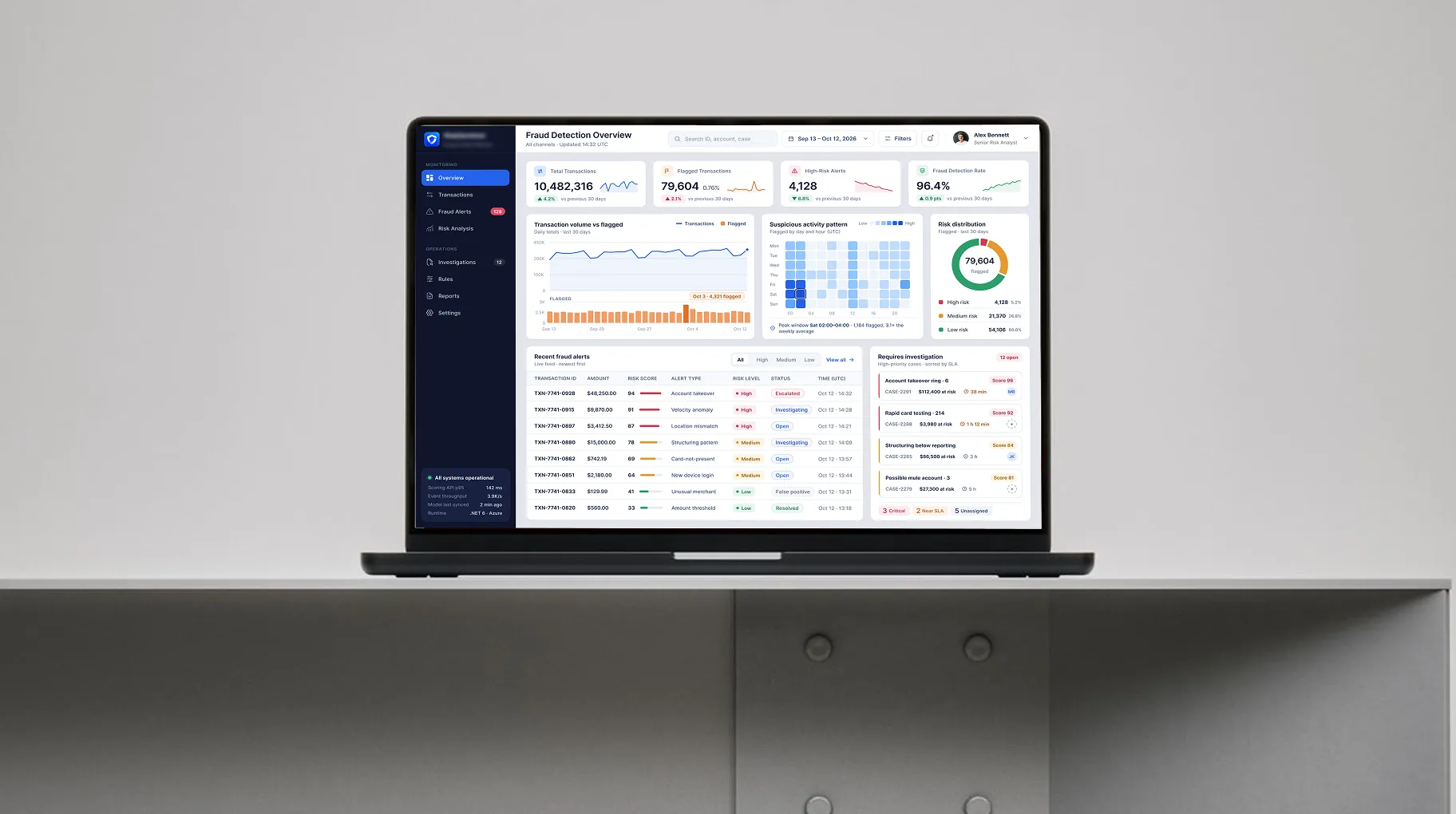
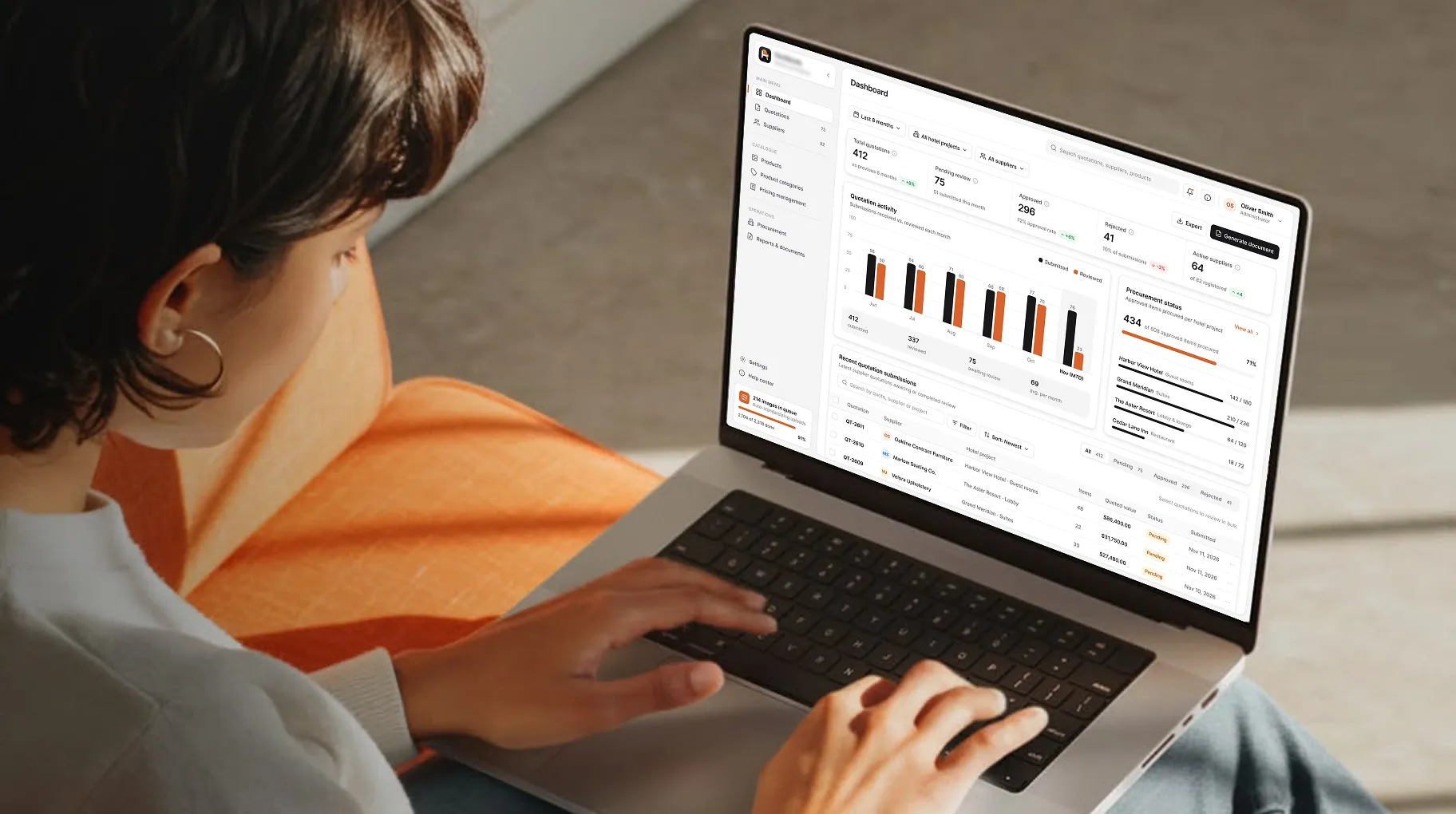
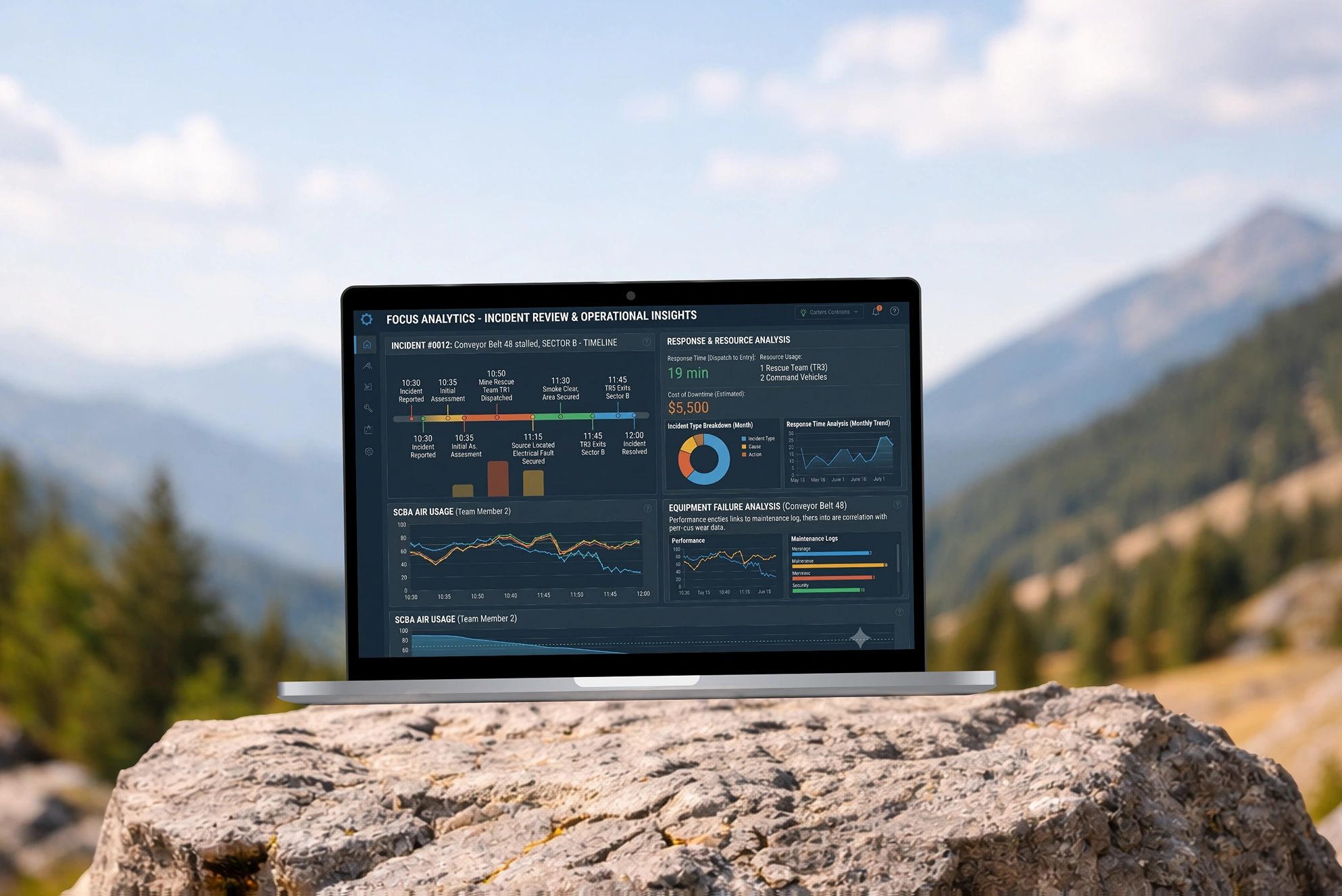
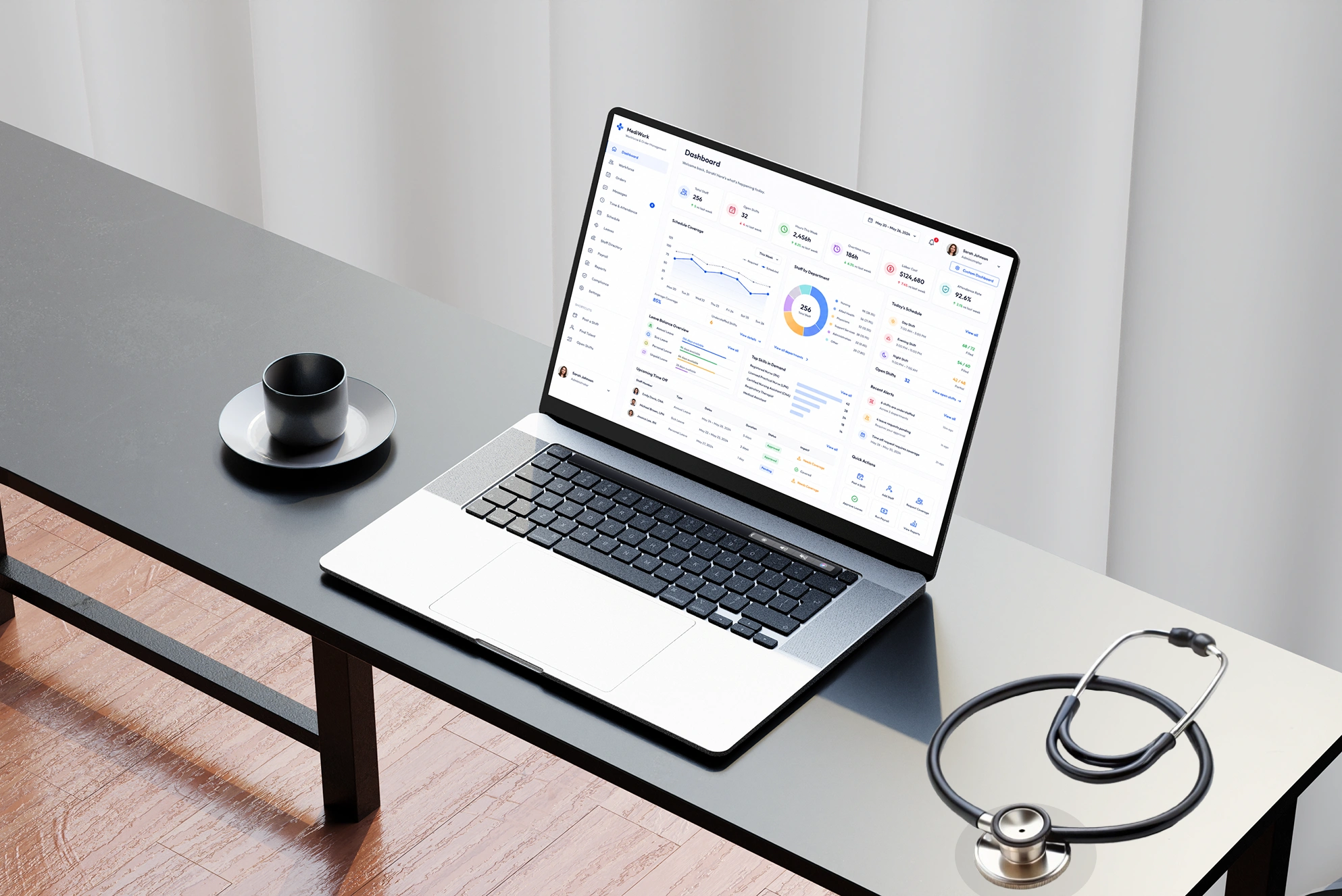
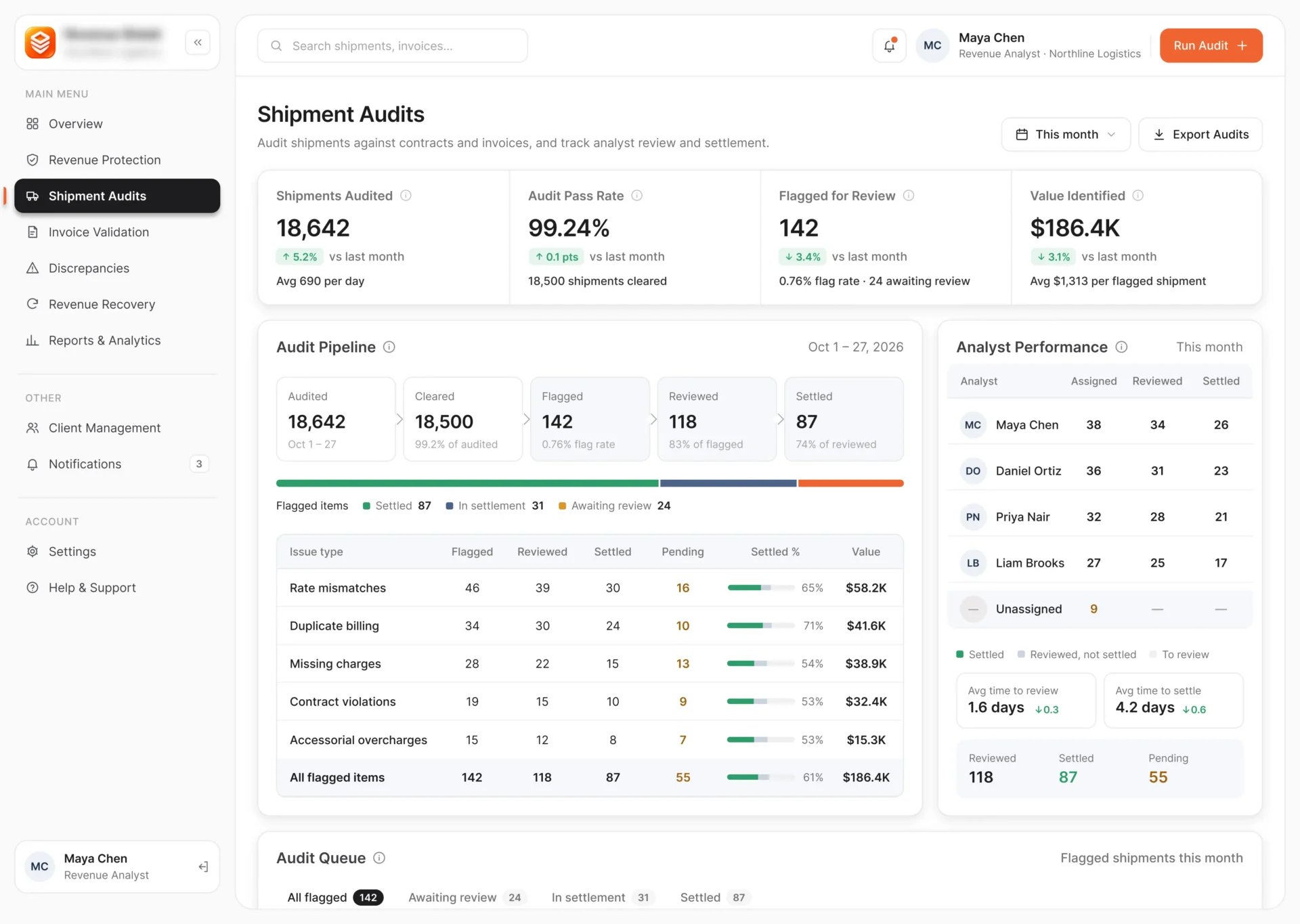
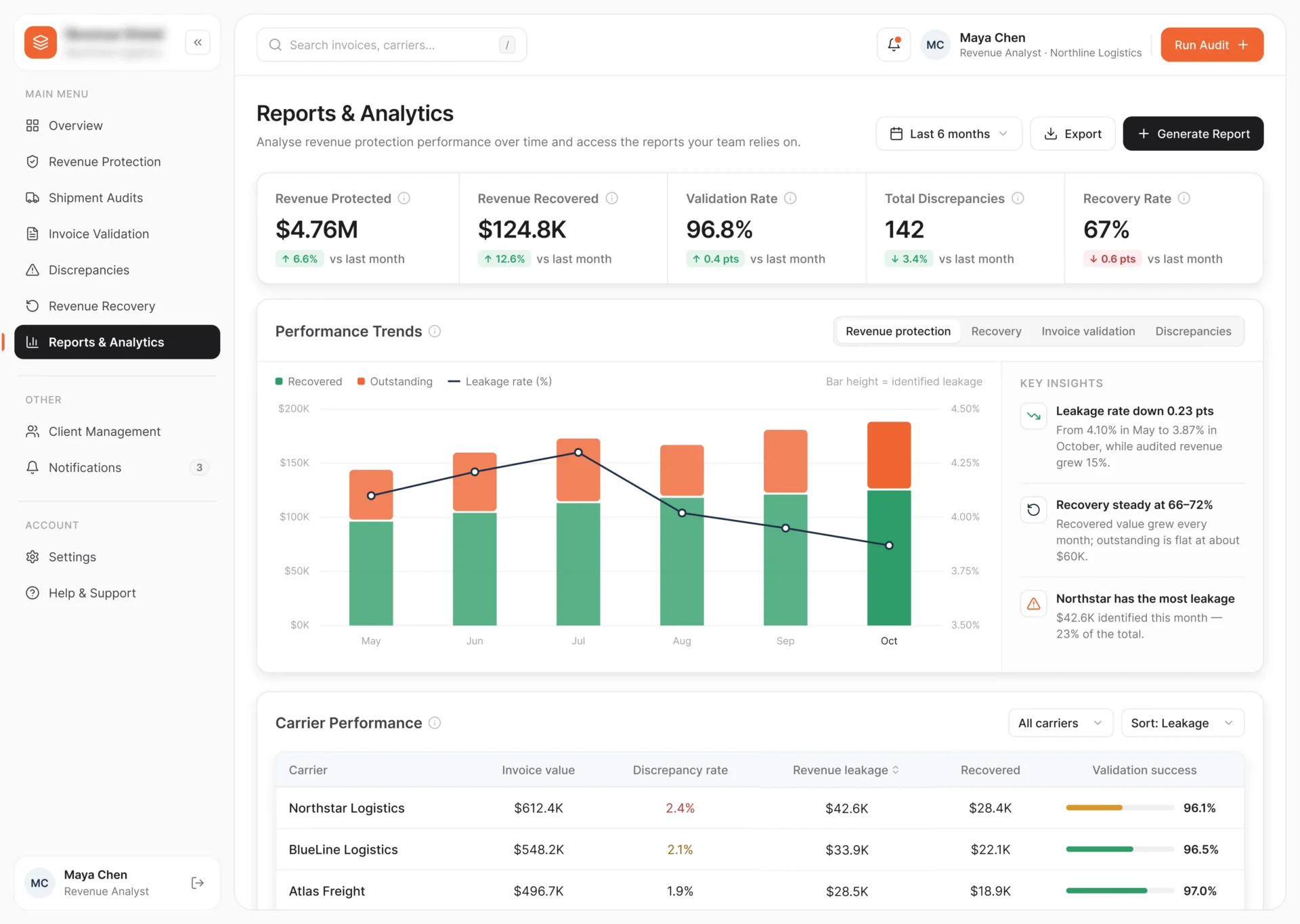
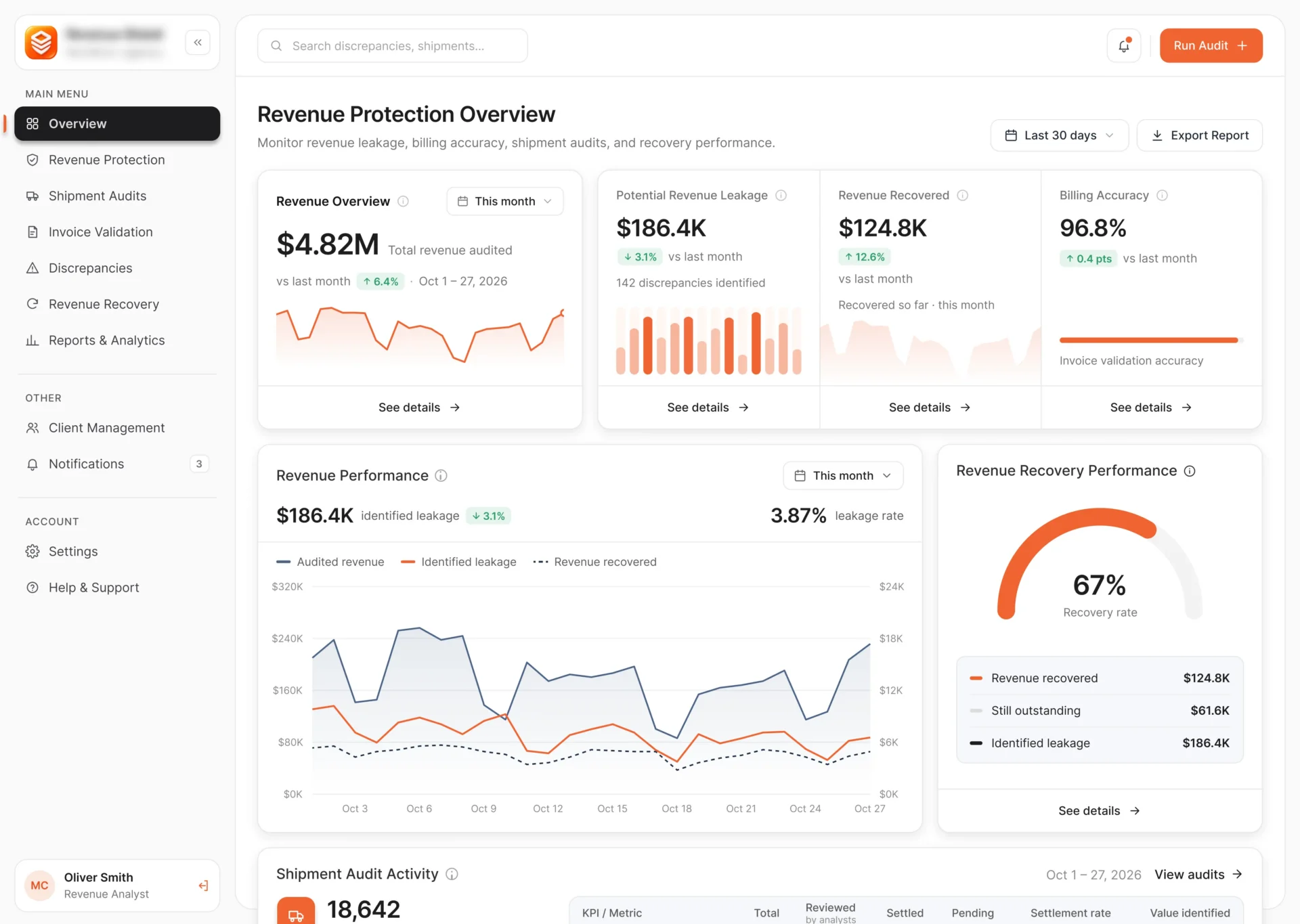
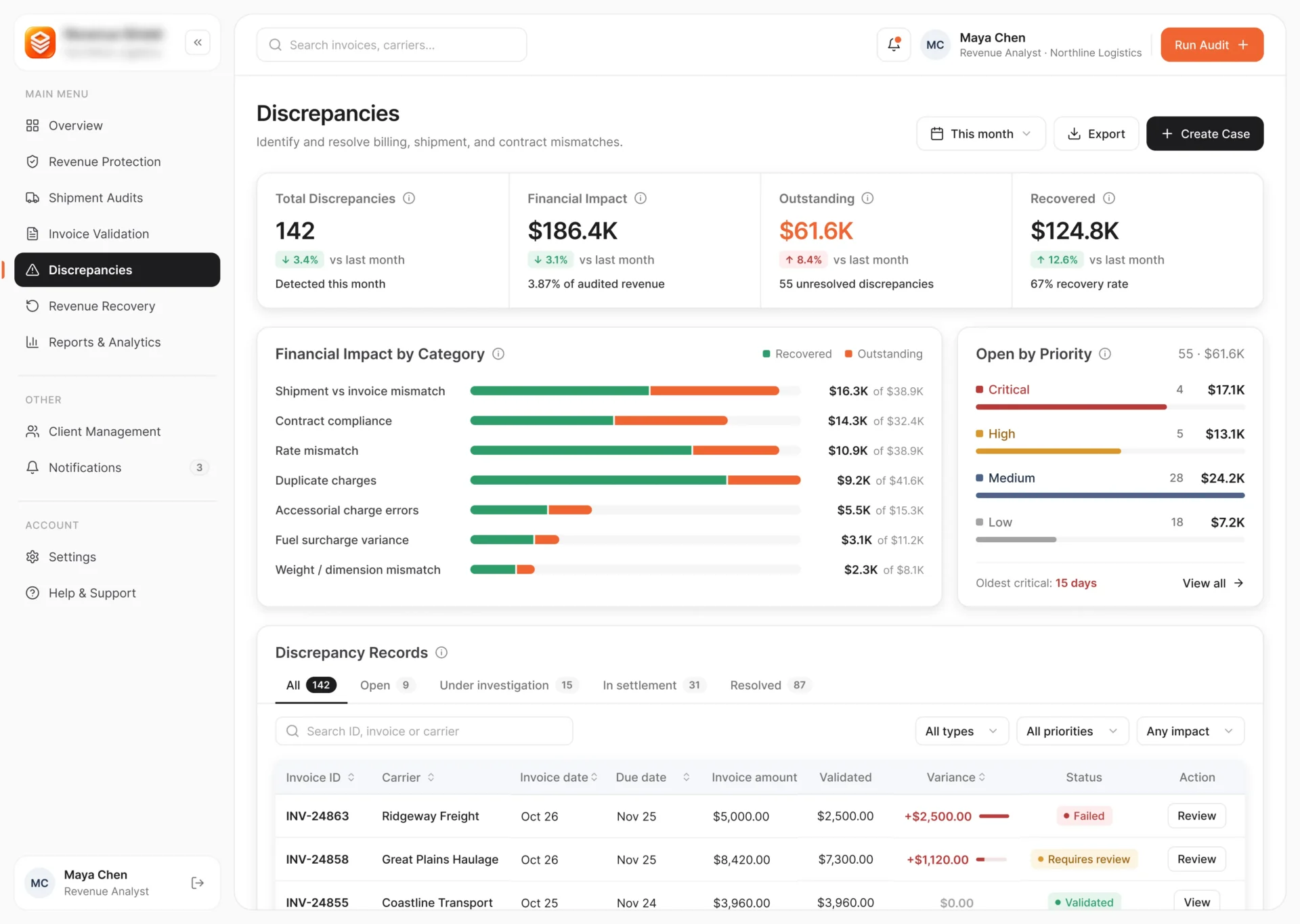
Built embedded analytics with Power BI. Acting as ARG’s Power BI consultant, our team designed Power BI Embedded dashboards that turn 3M+ records a day into KPIs inside the platform, such as missed charges by carrier, duplicate charges, and audit backlog. Each client sees only its own data.
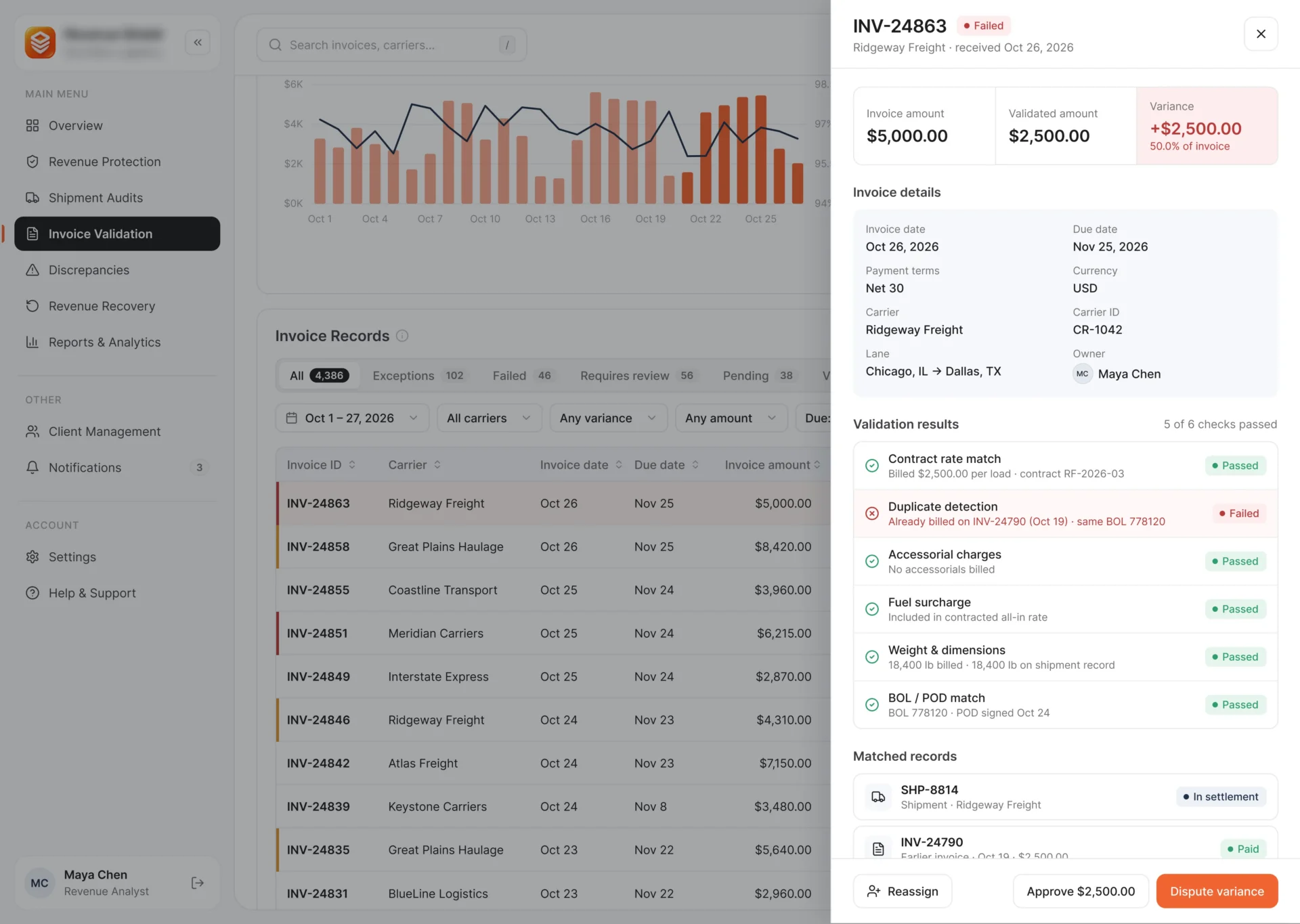
Reports & Analytics
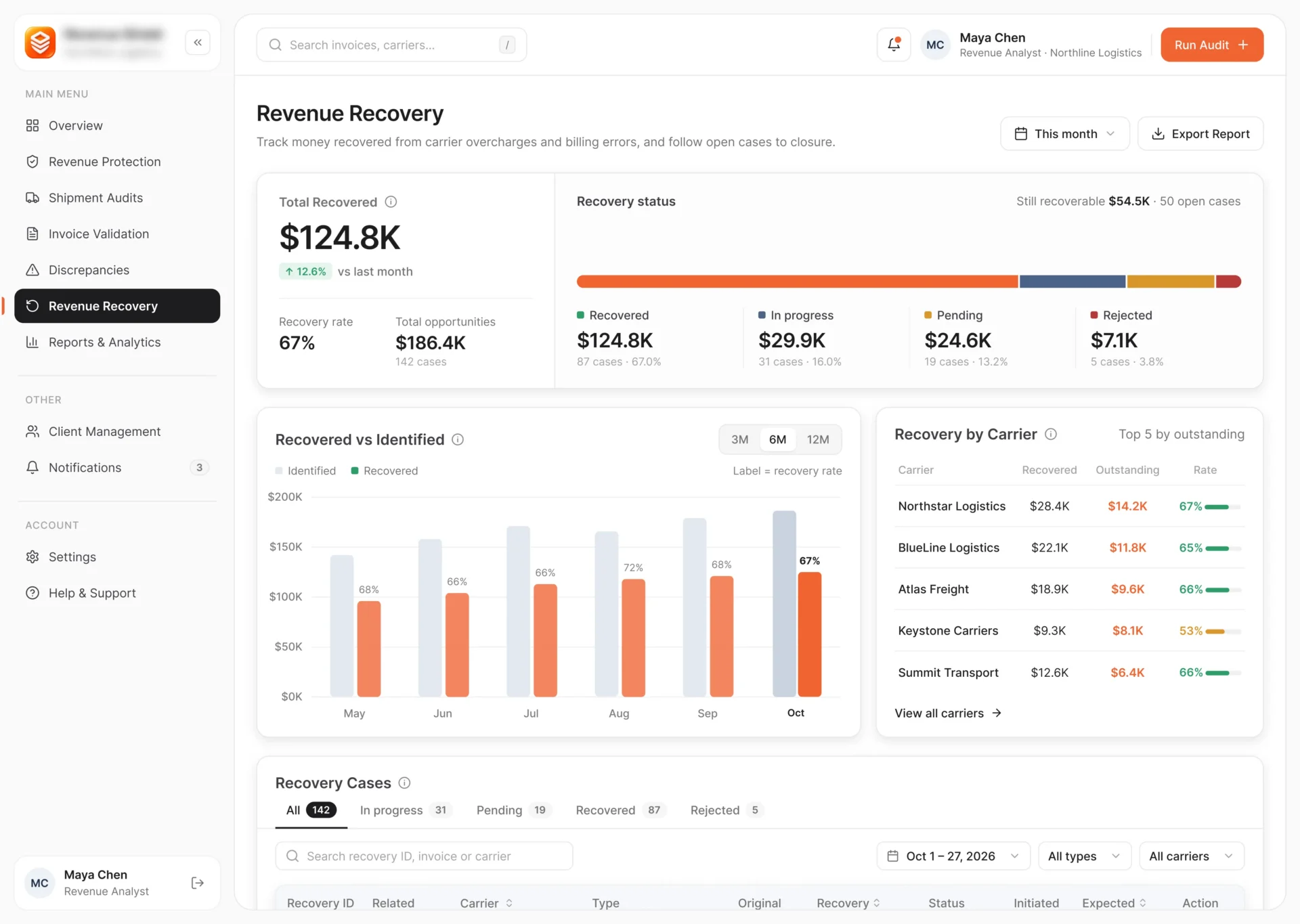
Revenue Recovery
"DataByteWorks moved our platform to Azure while our customers kept auditing. Our analysts now spend their time recovering revenue, not checking spreadsheets."
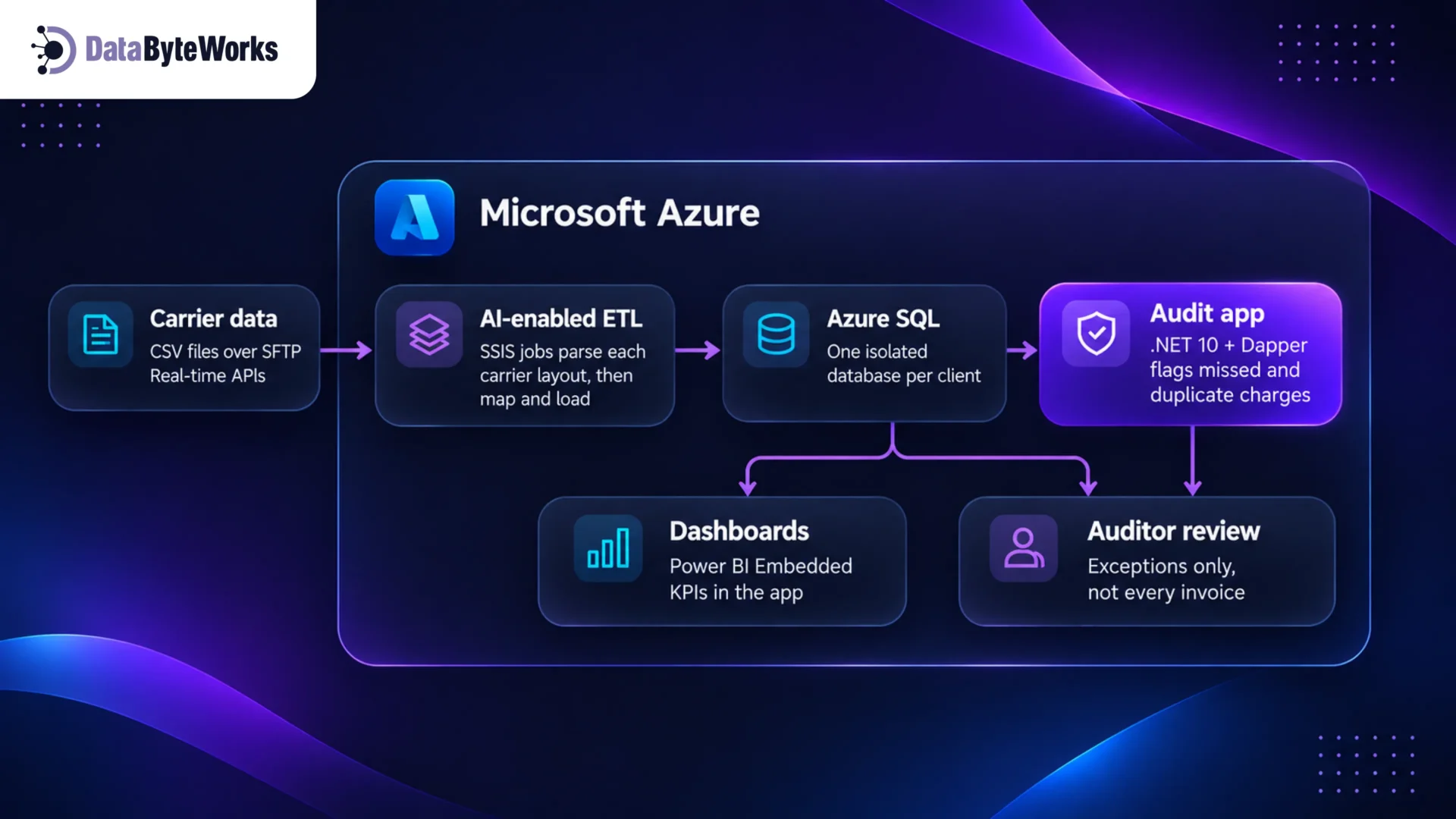
The platform runs as a logistics data analytics pipeline: ingest, clean, audit, visualize. Carrier data comes in as CSV files over SFTP or through real-time APIs, and AI-enabled ETL jobs parse each carrier’s layout and load it into that client’s own Azure SQL database.
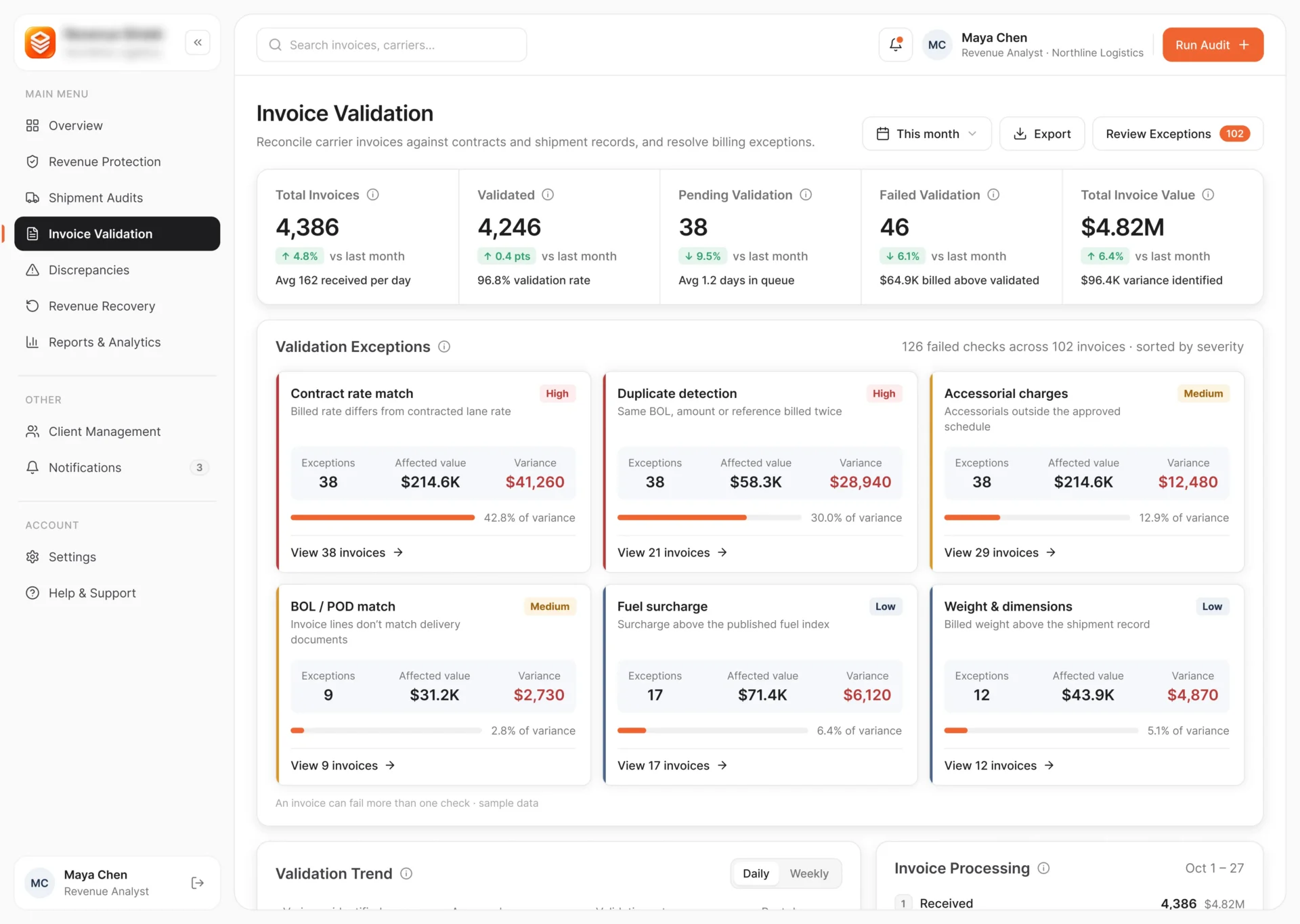
The audit app checks every charge against the rules and flags missed and duplicate charges, so auditors review exceptions instead of every invoice. Power BI Embedded dashboards show the KPIs inside the platform, and each client’s data stays in its own database, from the moment it is loaded to the moment it reaches a dashboard.
Power BI dashboards load in 4 seconds instead of 10.Faster dashboards mean analysts and customers get answers without waiting on reports.
What this means for ARG’s customers (ARG platform figures): Underbilling typically drops by about 20% after the first year, and customers see operating profit improve by 10% or more. The platform now serves 10+ client tenants, manages $15B+ in contracted revenue, and has kept 100% of its clients.
.NET 6
ASP.NET Core
Dapper
Azure SQL Database
Microsoft Azure
SSIS (AI-enabled ETL)
Power BI Embedded
SFTP
REST APIs
It depends on how much moves at once. For ARG, the application, database, and infrastructure all moved in nine months: .NET Framework 4.8 to .NET 10, SQL Server 2014 to Azure SQL, and on-premises servers and ETL to Azure. We supported the legacy system the whole time, so ARG's carrier customers kept running audits while the new platform went live.
Go straight to .NET 10. Microsoft ended support for .NET 8 on November 10, 2026, and .NET 10 is the long-term support release, supported until November 2028. ARG moved directly from .NET Framework 4.8 to .NET 10, skipping an interim upgrade and starting on a version with years of support ahead.
Multi-tenant is cheaper to run. Single-tenant is the right choice when customers must keep their data physically separate for compliance, as ARG's carriers do. We gave each client its own isolated Azure SQL database, a design that now serves 10+ clients with each client's data fully separate.
Start with ingestion, because no two carriers send data the same way. ARG receives CSV files over SFTP and real-time API feeds in layouts that vary by carrier. We made the SSIS ETL jobs AI-enabled, so they parse and map each layout, then load it into the client's own Azure SQL database for Power BI Embedded dashboards. The pipeline now handles about 3M+ records a day and 100M+ a month, without manual clean-up.
On this project, about 80%. Before, 5–8 auditors spent around 40 hours a week checking 100K+ shipments a month by hand. Now rules flag missed and duplicate charges automatically, with 10M+ duplicates caught so far, and auditors focus on the exceptions that need their judgment.
Clients see their numbers where they already work. With Power BI Embedded, ARG's customers open their KPIs inside the platform instead of exporting data to a separate tool. Because each client has its own database, each dashboard shows only that client's data.