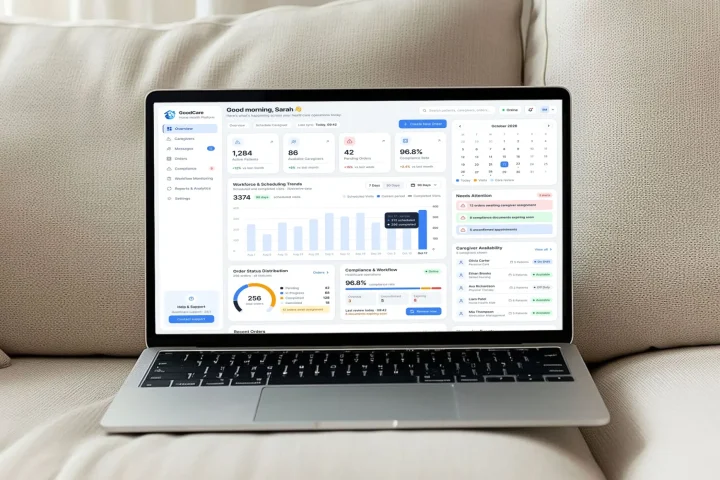
Comprehensive behavioral healthcare practice management platform designed to streamline patient management, scheduling, billing, reporting, and operational workflows for therapy and healthcare service providers.

We build, upgrade, and support business-critical applications on Microsoft .NET. Our .NET development services cover new products, cloud-ready APIs, AI features, and safe upgrades to .NET 10, the current long-term support release. Support for .NET 8 and 9 ended on November 10, 2026, so we help you move to a supportive version safely.






We build web, mobile, and desktop applications around how your business actually works, using ASP.NET Core, .NET MAUI, and WPF. Our custom .NET application development starts with your workflows, users, and data, not a template. We build on .NET 10 by default, so every new application starts with three years of Microsoft support and room to grow.
We build fast, secure web apps and REST APIs that other systems can rely on. Our ASP.NET Core development covers MVC, Razor Pages, Blazor and Minimal APIs, with built-in validation, OpenAPI documentation and passkey sign-in through ASP.NET Core Identity for passwordless, phishing-resistant logins.
Move legacy .NET Framework applications, or .NET 6, 8, and 9 codebases, to .NET 10 without a risky rewrite. Our .NET 10 migration work uses AI-assisted assessment tools, such as GitHub Copilot's upgrade agent, to map packages and breaking changes quickly. Our engineers then upgrade one project at a time and test every step. For older systems beyond .NET, legacy modernization services
Build cloud-ready apps from day one, or move existing ones to Azure with a clear plan. Our Azure .NET development covers App Service, Functions, Azure SQL, Key Vault, and Aspire for running connected services locally and in the cloud, set up for security, scale, and predictable monthly costs.
Add AI features and agents to the .NET apps you already run. We use Microsoft.Extensions.AI and the Microsoft Agent Framework, production-ready since April 2026, to build assistants, document processing, and multi-step workflows, with logging, human approval steps, and cost limits in place before anything goes live.
Keep live applications fast, patched, and stable after launch. We handle monitoring, monthly security updates, performance tuning, bug fixes, and small enhancements. Response times and priorities are agreed upfront, so you always know who's on it and how quickly issues will be picked up.
Whether you're planning an upgrade or building something new, a 30-minute call is the fastest way to find the right path. We'll review where you stand and suggest clear next steps.
Microsoft ships a new .NET version every November, so we plan your roadmap around it.
We build on the current long-term support (LTS) release and plan your next upgrade upfront. LTS versions get three years of support; standard-term versions get two.
AI tools draft code, tests, and upgrade steps. An engineer reviews every pull request before it ships.
We migrate one project at a time while the live system keeps running, so there's never a single high-risk cutover.

Proven project delivery for growing businesses and enterprises, backed by numbers.
Everything you need to build, upgrade, and run modern .NET applications, from the first architecture decision to long-term support.

Languages
C#
F#
TypeScript
Frameworks
.NET 10
ASP.NET Core
Minimal APIs
Blazor
SignalR
.NET MAUI
WPF
Front End
React
Angular
Razor Pages
Data
Entity Framework Core
SQL Server
Azure SQL
Cosmos DB
PostgreSQL
Redis
Azure Cloud
App Service
Azure Functions
AKS
Service Bus
Key Vault
Cloud-Native
Aspire
Docker
Kubernetes
microservices
AI
Microsoft Agent Framework
Microsoft.Extensions.AI
Azure OpenAI
MCP
Microsoft Ecosystem
Dynamics 365
Power BI
SharePoint
Microsoft 365
DevOps
Azure DevOps
GitHub Actions
GitHub Copilot
Testing & Monitoring
xUnit
NUnit
Playwright
Application Insights
Our Process
Every .NET project we take on follows the same five steps, whether it’s a new build or an upgrade of a system you rely on today. Each step has a clear output, so you always know what’s done, what’s next, and where your budget is going.
We learn your goals, users, and current systems. For existing apps, AI-assisted tools map every project, package, and breaking change, so the plan is based on facts, not guesses. Together we agree on scope and how success will be measured.
We choose the right .NET version, hosting model, and data design. Key decisions, trade-offs, and risks are documented, so your team understands the system, not just the code, and future upgrades are easier.
We deliver working software at the end of every sprint. AI tools help draft code and tests, and an engineer reviews every pull request before it's merged. You see progress early and can change direction quickly.
Automated tests, code reviews, dependency audits, and security scans run on every change. We load-test critical paths and confirm access controls, so problems are caught before release, not reported by users.
We deploy with a rollback plan, monitor closely after go-live, and keep improving. Your support terms and the next LTS upgrade on the .NET roadmap are agreed upfront.
The five-step framework above sets out what we do. These four principles shape how we carry out each step. They’re what keep your .NET applications secure, fast, and ready for whatever comes next, including AI.
Security starts in the first sprint, not the week before launch. We use passkey sign-in, least-privilege access, and secrets in Key Vault. .NET 10 audits NuGet packages for vulnerable transitive dependencies by default, and we act on every warning before release. For regulated workloads, we add audit logging from day one.
We profile and load-test the paths your users rely on most, not just the happy path. Upgrading alone brings gains: Microsoft reports .NET 10's Arm64 improvements cut garbage-collection pauses by 8–20%. We measure before and after, so you see exactly what changed for your application.
New applications are built to run in containers and scale on Azure from the start. We use Aspire to wire up services, databases, and queues consistently in development and production, with built-in telemetry, so issues are visible early and environments stay the same from laptop to cloud.
AI features go through the same review as any other code: defined permissions, full logging, and a human sign-off step before anything reaches real users, with usage and cost limits agreed before launch.
Every project is different, so our .NET development services come in three engagement models. Pick the one that fits your scope, timeline, and budget today, and switch as your needs change.
Best when your requirements are clear and stable. You get an agreed scope, timeline, and price before work begins, with milestones you can track and sign off. It's a good fit for new builds with a defined first release, or a version upgrade with a known codebase. A typical .NET upgrade takes 4–12 weeks, depending on the size of the codebase.
Best for products that keep evolving. A team works only on your product, led by a single point of contact, with daily overlap hours in your time zone. You set the priorities; we handle hiring, management, and delivery, and the team scales up or down as you need.
Best when you need experienced hands quickly. Our .NET developers join your existing team, use your tools, and follow your processes and code standards. Every developer passes a technical interview and a hands-on coding assessment, and most can start within 1–2 weeks. See how to hire .NET developers.
Why Us
Choosing a .NET development company is a long-term decision. Great code is only half the job; how we plan, communicate, and support you matters just as much. Here's what you get with us:

Share your project details and our team will respond within 24 hours.
Portfolio
Comprehensive behavioral healthcare practice management platform designed to streamline patient management, scheduling, billing, reporting, and operational workflows for therapy and healthcare service providers.
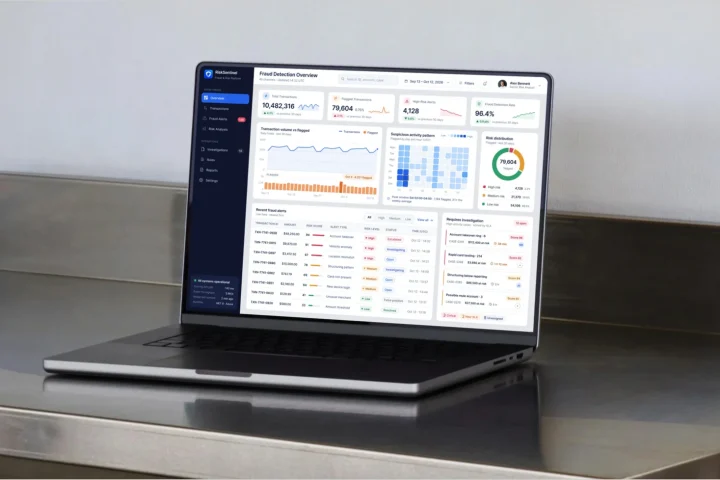
Enterprise fraud detection and risk management platform modernization project focused on migrating legacy systems from .NET Framework to modern .NET architecture to improve scalability, performance, and maintainability.
Luxury yacht booking and pricing platform designed to enhance customer engagement through interactive yacht cost estimation, modern UI redesign, and streamlined booking inquiry workflows.
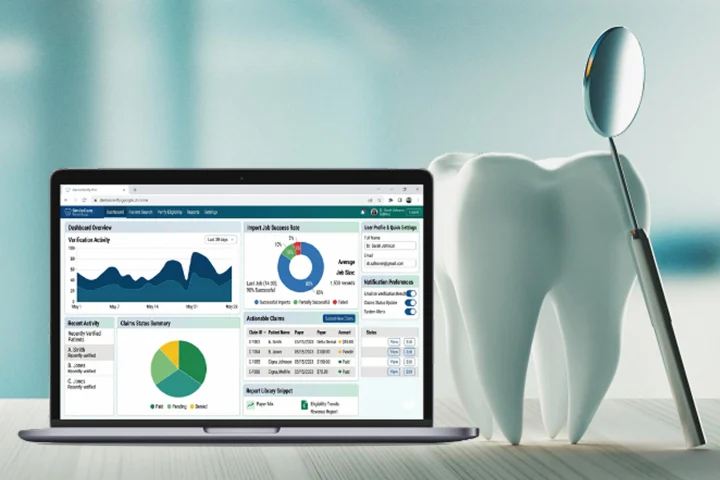
Healthcare insurance verification platform designed to automate dental insurance eligibility checks, streamline patient verification workflows, and improve operational efficiency for dental practices and healthcare providers.
Custom CRM and quotation management platform developed for the hotel furniture industry to streamline supplier quotation workflows, image processing, PDF generation, and project-based procurement management.

Tablet-centric mining and rescue operations platform designed to support field workforce management, offline data collection, operational tracking, and real-time synchronization for mining and emergency response environments.
Industries
Every industry has its own rules, data, and pressures, and your software should reflect them. These are the five industries our .NET teams focus on.
Fraud detection, payments, lending, and risk platforms, designed with PCI DSS in mind and built to handle high transaction volumes.
Practice management, insurance eligibility checks and patient workflows, with role-based access and audit logging for sensitive health data.
Order tracking, dispatch, revenue protection and analytics dashboards that turn operational data into faster daily decisions.
Multi-tenant platforms, subscription billing, customer portals and admin tools built to scale from first customers to thousands of users.
Order management, inventory and pricing tools integrated with your storefront, payment provider, and ERP for a single view of operations.
We've also built .NET solutions for Travel & Hospitality, Insurance & Mortgage, Mining & Industrial, and Legal & IP, including booking engines, quoting tools, offline-ready safety apps and document management systems.
We've also built .NET solutions for Travel & Hospitality, Insurance & Mortgage, Mining & Industrial, and Legal & IP, including booking engines, quoting tools, offline-ready safety apps and document management systems.
Great code is only half the job. How we communicate, plan and support you matters just as much, so every engagement is built on these commitments:
Our Testimonials
See how DataByteWorks turns business challenges into scalable .NET solutions that deliver performance, reliability, and lasting value.
Verified On Goodfirms
Our experience with DataByteWorks was very positive. Their team was professional, responsive, and delivered quality work on our project. We’d be glad to work with them again.
Verified On Clutch
They helped move the project in the right direction.
Verified On Upwork
DataByteWorks delivered a high-quality application, with strong expertise in Angular and .NET. We’ll continue working with them on other projects for our business.
Verified On Upwork
DataByteWorks completed our project exactly as expected, delivering on every requirement. A dependable team we’d be happy to work with again.
Verified On Upwork
DataByteWorks built a platform tailored precisely to our needs, and the impact on our operational efficiency has been remarkable. They exceeded our expectations at every stage and have become a technology partner we genuinely trust.
Verified On Upwork
DataByteWorks built a robust, scalable integration between our clients’ ERP systems. Their technical depth, understanding of our business, and transparent communication made them an outstanding partner.
Verified On Upwork
DataByteWorks has been an excellent partner for the development and ongoing maintenance of our application. Their deep .NET and Azure expertise, focus on security and stability, quick turnaround, and clear communication make them a dependable long-term partner. Highly recommended!
Verified On Clutch
They’ve shown strong cross-disciplinary expertise across app development, SQL Server, and Azure infrastructure.
Verified On Goodfirms
We’ve been working together for a while and I find that the team at DataByteWorks is able to understand complex concepts quickly. They extract and digest information very well.
Verified On Upwork
Thank you to DataByteWorks, and especially Mr. Raviraj, for the very good work and excellent cooperation. They were easy to work with and responsive to our needs throughout.
Verified On Clutch
The team’s communication skills, promptness, and sincerity were impressive.
Support for .NET 8 and .NET 9 ended on November 10, 2026. Your app keeps running, but Microsoft no longer releases security patches or bug fixes for it, so any new vulnerability stays open. For apps that handle customer or payment data, that's a compliance and security risk. The fix is to upgrade to .NET 10, which is supported until November 14, 2028.
For most business applications, upgrade to .NET 10. .NET 11 was released on November 10, 2026, as a standard-term support (STS) release with two years of support, ending November 14, 2028. That's the same end date as .NET 10, the long-term support (LTS) release. Since support ends on the same day, the choice comes down to maturity. .NET 10 has had a year of fixes and broad library and tool support. .NET 11 suits teams that want the newest features and are comfortable upgrading again soon. Either way, plan your move to .NET 12, the next LTS release, due in November 2027 under Microsoft's yearly release schedule.
It depends on the size of the codebase, the number of third-party packages, and your test coverage. Moving from one LTS release to the next is usually the smallest jump. Most upgrades take 4–12 weeks. We start with a short assessment and give you a scoped estimate before any work begins.
Yes, for most applications. We don't do a single cutover; each project moves over on its own schedule while everything else keeps running on the old system. If a migrated piece doesn't behave as expected in production, we roll back to the previous version while we fix it, so one bad release never takes the whole application down.
AI tools can assess a codebase and apply many of the repetitive changes like renamed APIs, updated package references, and flagged breaking changes. What they can't do is know why your code works the way it does. Every automated change is reviewed by an engineer who understands your business logic before it's merged, so the upgrade doesn't quietly break a rule the tool had no way of knowing about.
Usually, yes! The better question is which parts of your application are worth it. Good candidates are repetitive, well-defined tasks with a clear "right answer" to check against, like document processing or support-ticket triage. We start with one scoped use case, add the permission and logging layer around it, and expand once it's proven out, rather than retrofitting agents across the whole application at once.
Cost depends on scope, complexity, integrations, and the engagement model you choose. A fixed-scope project is priced upfront; a dedicated team or augmented developers are billed monthly. After a short discovery call, we'll give you a clear estimate.
.NET Framework is the original, Windows-only platform, and it no longer gets new features. Modern .NET, now .NET 10, runs on Windows, Linux, and macOS, ships a new version every November, and is where new performance, cloud, security, and AI features land. New projects should start on modern .NET.